
Falls are not accidents.
That framing matters. When we describe a fall as an accident, we imply randomness, unpredictability and the absence of preventable cause. But the research on falls in older adults tells a different story.
Falls are the predictable outcome of specific, measurable physiological deficits: reduced proprioceptive acuity, impaired balance control, decreased muscle strength in the lower limbs, slowed neuromuscular response time and the reduced gait stability that these deficits combine to produce.
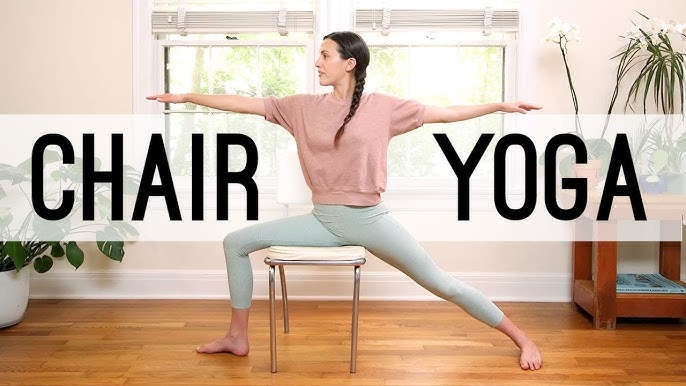
Every one of these deficits is modifiable. And chair yoga addresses several of them simultaneously in a format that is accessible to older adults who cannot safely practise floor-based yoga.
This is why Singapore’s geriatric specialists are paying attention.
Why Falls Matter More Than Most People Realise
A hip fracture following a fall in an adult over 65 is not simply an orthopaedic event.
It is a clinical trigger with cascading consequences. Mortality rates within twelve months of a hip fracture in older adults are between 20 and 30 percent in most developed healthcare systems, including Singapore’s. Of those who survive, a significant proportion never return to their pre-fracture functional level. Many require long-term care that they did not need before the fall.
Singapore’s rapidly ageing population makes fall prevention a genuine public health priority. By 2030, one in four Singaporeans will be 65 or older. The cumulative cost of fall-related injuries to the healthcare system and to individuals’ quality of life is projected to be substantial.
Prevention is not only more humane than treatment. It is dramatically more cost-effective. And the intervention evidence for specific movement-based programmes in reducing fall rates is strong enough that Singapore’s geriatric specialists are increasingly moving beyond general advice to exercise toward specific format recommendations.
Chair yoga is among the most consistently recommended.
The Proprioception Deficit and How Chair Yoga Addresses It
Proprioception, the body’s internal sense of its own position and movement in space, is generated by mechanoreceptors in the muscles, tendons, joints and skin that continuously send spatial information to the brain.
These mechanoreceptors decline in number and sensitivity with age. The speed at which proprioceptive signals travel along peripheral nerves also slows. The central processing of this information becomes less efficient.
The practical consequence: older adults are less able to detect small balance disturbances before they become large ones. When a stumble begins, the detection and correction response is slower. A stumble that a younger adult corrects automatically becomes a fall for an older one whose proprioceptive early warning system is no longer adequate.
Chair yoga specifically trains proprioception through several mechanisms that floor-based yoga formats do not deliver as safely for this population.
Seated balance challenges, where the practitioner shifts weight from side to side or forward and backward while maintaining an upright spine without using the chair back for support, create proprioceptive demands at the trunk and hip level that directly train the balance control system in a safe, fall-protected environment.
Ankle and foot movement sequences, including specific circling, pointing, flexing and resistance work performed from the chair, stimulate the foot and ankle mechanoreceptors that provide the most critical proprioceptive input for standing balance. These receptors are among the first to decline with age and among the most directly trainable through specific movement.
Transitional movements, specifically the sit-to-stand and stand-to-sit transitions that a well-designed chair yoga class incorporates multiple times per session, train the specific neuromuscular pattern that is most directly relevant to fall prevention in daily life. These transitions require hip and knee extension strength, postural control during a weight-shifting movement and the proprioceptive accuracy to manage the changing centre of gravity during the transition.
The Research Evidence That Geriatric Specialists Are Citing
The clinical evidence for chair yoga specifically in fall prevention is growing.
A landmark randomised controlled trial published in 2015 found that older adults who participated in a chair yoga programme twice weekly for eight weeks showed significant improvements in static and dynamic balance measures compared to a control group. The balance improvements were associated with a 40 percent reduction in self-reported falls during the intervention period.
Subsequent studies have replicated and extended these findings. Consistent themes across the chair yoga fall prevention research include improvements in timed-up-and-go test performance, which measures the functional mobility that predicts fall risk, improvements in one-leg standing time, which is among the strongest individual predictors of fall occurrence, and improvements in gait parameters including stride length, gait speed and cadence that reflect the neuromuscular improvements that chair yoga drives.
What makes these findings particularly clinically significant is the population in which they are demonstrated. Chair yoga research consistently includes participants who are older, more frail and more physically limited than the participants in general yoga research. The format’s accessibility is precisely what makes it effective for the population at highest fall risk.
Singapore’s geriatric medicine community has access to this evidence base, and the practitioners most engaged with movement-based fall prevention are increasingly specific about format when making recommendations.
The Functional Strength Component
Proprioception is only part of the fall prevention picture.
Muscle strength in the lower limbs, specifically the quadriceps, hamstrings, hip abductors and ankle plantar flexors, is equally critical. These muscles are the mechanical system through which proprioceptive balance signals are translated into corrective movements. A proprioceptive system that detects a balance disturbance but cannot generate sufficient muscular force to correct it quickly enough is still a fall risk.
Chair yoga addresses lower limb strength through specific seated and standing exercise components that are accessible even to practitioners with limited standing tolerance.
Seated leg press movements using elastic resistance bands, seated hip abduction and adduction exercises, and the specific demands of repeated sit-to-stand transitions all provide meaningful lower limb strength training stimulus within the safe, supported environment of a chair-based practice.
For older practitioners who cannot tolerate the standing demands of a full mat yoga class, chair yoga’s seated lower limb strengthening may be the only accessible format for addressing the muscle strength deficits that fall risk requires.
Studios like Yoga Edition that design their chair yoga programming with a genuine understanding of the fall prevention evidence, incorporating the specific proprioceptive, balance and strength components that the research supports, are delivering a service whose public health value extends considerably beyond the immediate wellness benefit of individual sessions.

Comments are closed.