
There are various biological factors affecting fertility, and environmental factors can influence overall comfort and conditions during intimacy. Sperm can survive for 2 to 5 days in a conducive environment with a pH balance and a chemically compatible lubricant. Most lubricants available in the market are for comfort only, and they are not conducive to sperm. Couples planning for conception should definitely use a fertility lubricant designed for use while trying to conceive. It is important for couples to know what goes into these lubricants in order for them to make the right choice depending on their situation.
Sperm Sensitivity to Environment
Sperm are very sensitive to the environment in which they are found, with the motility of the sperm being influenced by pH levels, hydration, and the chemical nature of the lubricants used during intimacy. Most couples have turned to the use of fertility lubricants that are made to support the sperm as they travel to the egg.
Importance of Reproductive Compatibility
When a lubricant is formulated to match the properties of the female reproductive tract, it is designed to be compatible with the natural reproductive environment.
Sperm-Friendly Ingredients in Fertility Lubricants
Sperm-friendly fertility lubes are manufactured with ingredients that promote sperm movement and longevity as compared to general-purpose lubes or lubricants not designed for fertility use. In this manner, these product ingredients help maintain properties such as being isotonic and pH-balanced, similar to the vaginal environment.
Some common ingredients found in lubricants designed for couples trying to conceive include:
- Hydroxyethylcellulose (HEC) – Evidence suggests that HEC will provide a viscosity similar to that of normal cervical mucus.
- Purified water – Clean, oil-free lubricant base for ease of use.
- Balanced electrolytes – Optimal conditions for sperm motility, pH-balanced formulations – compatibility with the female reproductive tract.
Lubricants containing the ingredients identified above would be among the best fertility lubricants for couples trying to conceive.
Ingredients That May Affect Sperm
There are many ingredients that can be found in most commercial products (general use lubricants) that will create less than optimal conditions for sperm.
Some examples of these ingredients may include:
- Excessive levels of glycerin
- Chemicals used in preservatives (e.g., parabens, nonoxynol-9)
- Artificial fragrances
- Alkali imbalance (i.e., pH)
Using a carefully designed fertility lubricant, couples can reduce the chances of negatively impacting their sperm motility.
Conclusion
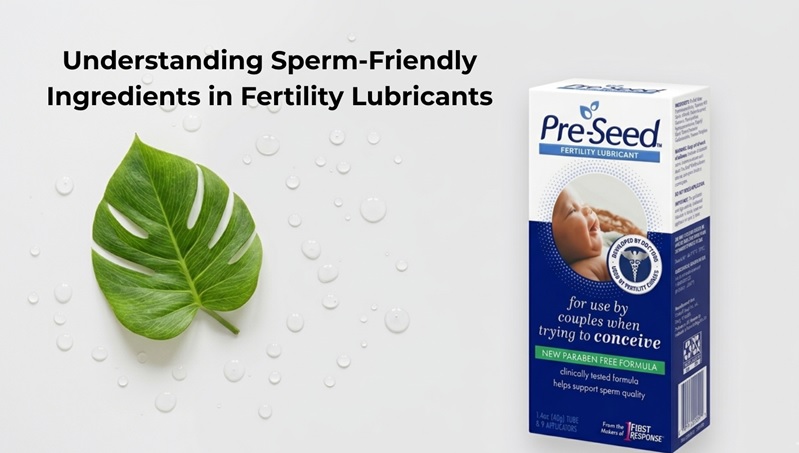
Helping couples make informed decisions about fertility lubricants ultimately supports the natural conception process by ensuring appropriate lubrication while maintaining conditions that are conducive to sperm health. Pre-Seed Fertility Lubricant is one of the most well-known and highly regarded fertility lubricants among couples trying to conceive. It is specifically formulated to be isotonic and pH-balanced, and studies show it does not interfere with sperm function when used as directed.


Comments are closed.